
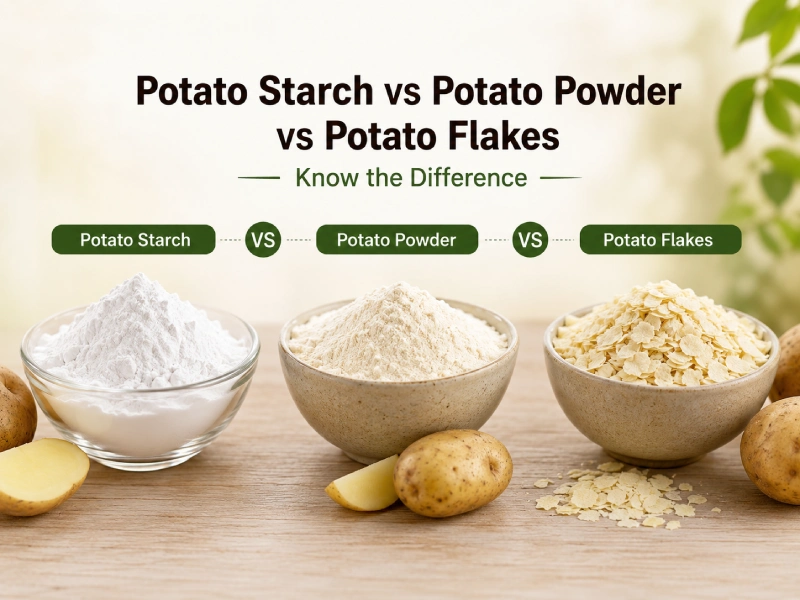
Selecting the right potato ingredient can directly affect product quality, processing efficiency and production costs. Many food manufacturers compare Potato Starch vs Powder vs Flakes before finalizing formulations because each ingredient performs differently in texture, moisture retention, flavor and functionality.
If you’re sourcing from experienced dehydrated potato manufacturers, understanding these differences will help you choose the best ingredient for snacks, bakery products, soups, sauces, seasonings, instant foods and frozen meals.
Although all three products originate from potatoes, they are manufactured differently and serve completely different purposes in commercial food production.
Why Understanding the Difference between Potato Starch vs Powder vs Flakes Matters
Many buyers assume potato starch, potato powder and potato flakes are interchangeable. In reality, replacing one with another can change:
- Product texture
- Water absorption
- Cooking performance
- Flavor profile
- Shelf stability
- Production costs
Understanding each ingredient helps food businesses achieve consistent product quality while reducing formulation errors.
What is Potato Starch?
Potato starch is extracted from fresh potatoes by separating the starch from the fiber and protein.
Unlike potato powder, it contains very little potato flavor.
Key Characteristics
- White fine powder
- Neutral taste
- Excellent thickening ability
- High water-binding capacity
- Gluten-free
Common Applications
- Soups
- Sauces
- Gravies
- Bakery products
- Instant desserts
- Meat processing
- Noodle manufacturing
Potato starch is mainly used as a functional ingredient rather than a flavor ingredient.
What is Potato Powder?
Dehydrated potato powder is produced by cooking, drying and finely grinding whole potatoes.
Since the complete potato is used, the powder retains the natural flavor and nutrients.
Features
- Rich potato taste
- Fine consistency
- Easy mixing
- Good rehydration
- Long shelf life
Applications
- Instant soup premixes
- Seasoning blends
- Ready-to-eat foods
- Baby food
- Dry mixes
- Snack coatings
Food manufacturers often choose dried potato powder when an authentic potato flavor is important.
What are Potato Flakes?
Potato flakes are made by cooking mashed potatoes and drying them into thin flakes.
When mixed with water, they quickly return to a mashed potato consistency.
Main Benefits
- Excellent water absorption
- Fast rehydration
- Natural potato taste
- Easy handling
- Consistent texture
Common Uses
- Instant mashed potatoes
- Bakery products
- Snack manufacturing
- Frozen foods
- Extruded snacks
- Meat products
Dehydrated potato flakes are widely used because they improve softness and moisture retention.
Quick Comparison
Potato starch is extracted as pure starch, giving it a neutral flavor and excellent thickening ability. It offers high water absorption and significantly improves texture, making it an ideal choice for sauces, soups, gravies and processed foods.
Potato powder is made from whole potatoes, providing a rich potato flavor with moderate thickening and water absorption properties. It rehydrates well and is commonly used in seasonings, instant mixes, snack coatings and ready-to-cook food products.
Potato flakes are produced from cooked and mashed potatoes, delivering a natural potato taste with excellent rehydration and very high water absorption. They are best suited for bakery products, snacks, mashed potato mixes and food formulations that require improved texture and moisture retention.
Why Dehydrated Potato Ingredients Continue to Grow
The global food industry increasingly prefers dehydrated potato ingredients because they offer:
- Longer shelf life
- Lower transportation costs
- Consistent quality
- Reduced preparation time
- Less food waste
- Easy storage
- Year-round availability
These advantages are especially valuable for exporters and large-scale food manufacturers.
Choosing a Reliable Supplier
The quality of potato ingredients depends on manufacturing practices.
Before selecting a supplier, verify:
- Raw material sourcing
- Controlled dehydration process
- Moisture testing
- Food safety certifications
- Batch consistency
- Export-quality packaging
- Stable production capacity
Working with experienced dehydrated potato manufacturers helps ensure consistent ingredient performance across every production batch.
Final Thoughts
Understanding the differences between potato starch, potato powder and potato flakes helps food manufacturers choose the right ingredient for their specific applications. Each product offers unique benefits, whether it’s thickening, enhancing flavor, improving texture, or increasing moisture retention.
Selecting the right option depends on your product formulation, processing requirements and customer expectations. Chhatariya Foods Pvt. Ltd. is a trusted manufacturer and exporter of premium dehydrated potato products, delivering consistent quality, reliable supply and strict quality standards.
FAQ
1. What is the main difference between potato starch, potato powder and potato flakes?
Potato starch is extracted from potatoes and mainly used for thickening. Potato powder is made from whole dehydrated potatoes and retains natural flavor, while potato flakes are produced from cooked mashed potatoes and are valued for texture and fast rehydration.
2. Which potato ingredient is best for bakery products?
Potato flakes are commonly used in commercial baking because they improve moisture retention, bread softness, dough handling and shelf life. They also help create a more consistent texture in baked products produced at scale.
3. Can potato powder replace potato starch in food manufacturing?
Not always. Potato powder provides flavor and nutrition, whereas potato starch mainly functions as a thickening agent. Replacing one with the other may change texture, viscosity, cooking performance and the overall quality of the finished product.
4. Why do snack manufacturers use dehydrated potato flakes?
Snack manufacturers use dehydrated potato flakes because they improve expansion, texture, moisture retention and product consistency. They also simplify production by offering stable quality and quick rehydration during food processing.
5. How should dehydrated potato products be stored?
Store dehydrated potato products in sealed, moisture-proof packaging in a cool, dry environment away from direct sunlight. Proper storage helps preserve quality, prevents moisture absorption and extends shelf life for industrial applications.
6. What should buyers check before choosing dehydrated potato manufacturers?
Buyers should evaluate raw material quality, dehydration technology, food safety certifications, moisture control, batch consistency, packaging standards, production capacity and export experience to ensure reliable supply and consistent product performance.