
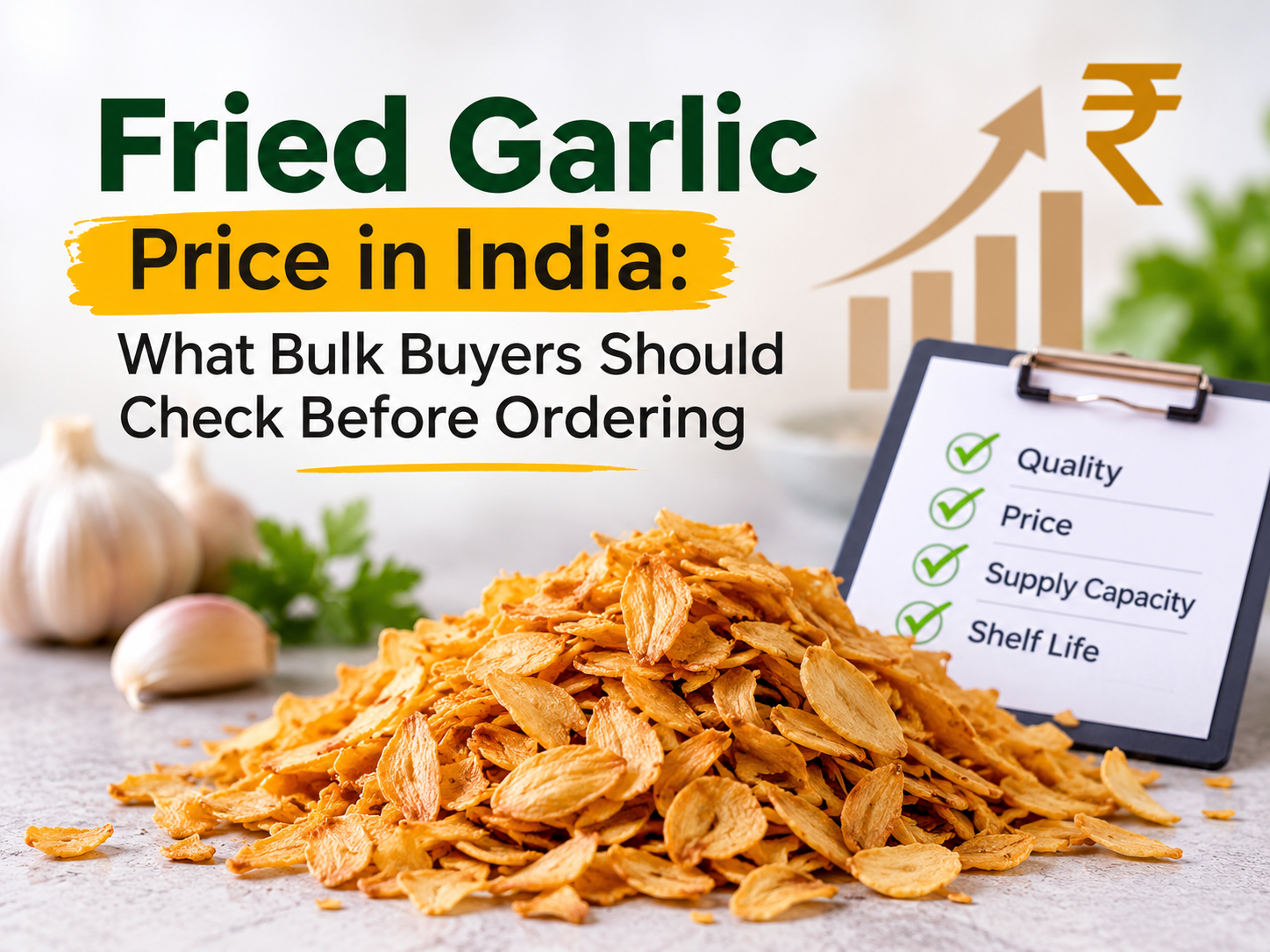
The Fried Garlic Price in India can vary depending on the product’s quality, processing method, oil content, packaging and order quantity. For food manufacturers, snack brands, restaurants and exporters, the lowest quotation may not always offer the best value. A product that lacks consistent flavour or texture can affect the finished recipe and increase production costs.
Before placing a bulk order, buyers should compare specifications, test samples and understand exactly what the quoted price includes. Working with a reliable Fried Garlic Supplier can help businesses evaluate product suitability, supply consistency and purchasing terms before committing to a large shipment.
What Influences Fried Garlic Price in India?
Fried garlic is used in savoury foods because it adds a roasted garlic flavour and a crunchy texture. However, not all products are processed or supplied to the same specifications.
1. Raw garlic quality and processing
The quality of the raw garlic and the processing method can influence flavour, colour, texture and production yield. Buyers should ask about the product’s specifications and processing details rather than assuming that every supplier offers an equivalent grade.
2. Oil type and oil content
Fried garlic is typically prepared using oil, so the type of oil and the product’s residual oil content may affect its price and suitability. Buyers should confirm the oil used, relevant allergen or ingredient declarations and any requirements linked to their target market.
3. Texture, colour and size
Some applications need crisp, golden garlic pieces, while others may accept a different particle size or texture. More specific requirements can affect product availability and processing costs. Agree on acceptable colour, size and texture before approving the order.
4. Order quantity and packaging
Bulk orders may have different price structures from smaller packs. Packaging also affects the overall quotation, particularly when the product needs protection from moisture, air exposure or physical damage during transport.
How to Compare Bulk Quotations Fairly
When comparing fried garlic manufacturers in India, make sure each quotation refers to the same product specifications. Otherwise, a lower price may simply reflect differences in quality, packaging or commercial terms.
Ask every shortlisted supplier to confirm:
- Product form, size and agreed quality specifications.
- Oil type and ingredient declaration.
- Packaging material, pack size and quantity per carton.
- Minimum order quantity and production lead time.
- Available quality reports and batch identification.
- Delivery charges, payment terms and applicable taxes.
- Export-related documentation, if the order is international.
A clear, written quotation makes it easier to compare suppliers and reduces the risk of unexpected costs after an order is confirmed.
Choosing the Right Fried Garlic for Your Application
The best product depends on how your business plans to use it. Test the sample under realistic production conditions before selecting a supplier.
Fried garlic for seasoning blends
Seasoning manufacturers should check whether the pieces distribute evenly and retain the desired flavour and texture in the finished blend. If the seasoning will be applied to snacks, test it using the intended mixing or coating process.
Snacks, namkeen and ready-to-eat foods
Snack manufacturers should assess crispness, flavour, particle size and performance during processing and storage. Moisture exposure can affect texture, so the final packaging and product handling conditions should also be considered.
Restaurants, cloud kitchens and catering
Commercial kitchens may prioritise flavour consistency, convenient pack sizes and reliable replenishment. A sample test in regular menu items can help teams decide whether the ingredient meets their preparation and serving needs.
Fried Garlic, Dried Fried Garlic and Dehydrated Fried Garlic
These terms should not automatically be treated as interchangeable. Fried garlic generally refers to garlic cooked in oil, while dehydrated garlic usually describes garlic dried by removing moisture. A product described as dried fried garlic may refer to fried garlic that has undergone additional drying or is marketed under a supplier-specific description.
Buyers should confirm the actual manufacturing process, ingredient list, oil content and storage requirements. This is particularly important for exporters, who may need accurate product descriptions and documentation for customs, labelling and destination-market compliance.
For regulatory context, consult the Food Safety and Standards Authority of India (FSSAI) and verify the rules applicable to your specific product and market.
How to Select a Reliable Fried Garlic Exporter in India
Price matters but the supplier’s ability to deliver the agreed product consistently is equally important. Before placing a large order, request a representative sample and review the relevant quality documents.
Look for a supplier that can explain its specifications, packaging options, lead times and batch identification process. Export buyers should also confirm the required certificates, shipping documents, labelling details and import rules before production or dispatch.
For repeat orders, retain the approved sample or documented specifications as a reference. This makes it easier to identify changes in colour, texture, flavour or packaging between shipments.
Final Thoughts
Choosing the right fried garlic supplier involves more than comparing prices. Product quality, texture, packaging, shelf life and delivery terms all play a role in getting value for your investment. Comparing similar product specifications and testing samples can help you make a more informed purchasing decision.
For bulk buyers, sharing your intended application, required quantity, preferred texture, packaging specifications and delivery location helps suppliers provide accurate quotations. Chhatariya Foods Pvt. Ltd. offers food ingredient solutions for businesses seeking reliable products for their processing and manufacturing needs.
FAQ
1. What is the fried garlic price in India for bulk orders?
The price depends on raw garlic quality, frying method, oil type, product specifications, packaging and order volume. Freight, taxes and payment terms may also affect the final cost. Request comparable written quotations from suppliers and confirm all specifications before evaluating the lowest offer.
2. What should buyers check before purchasing dried fried garlic?
Buyers should evaluate colour, crispness, flavour, particle size, oil content and packaging. Ask for the ingredient declaration, relevant quality reports and storage instructions. Testing a sample in the intended recipe can help determine whether the product meets your requirements before placing a large order.
3. How do I choose reliable fried garlic manufacturers in India?
Compare manufacturers based on product consistency, processing details, quality checks, batch identification, packaging options and delivery reliability. Request samples and available documentation before committing. Clear communication about specifications, minimum order quantities and complaint handling can help establish a more dependable long-term supply relationship.
4. Is fried garlic suitable for seasoning blends?
Yes, fried garlic can add roasted flavour and texture to selected seasoning blends, savoury snacks and other food products. Suitability depends on particle size, oil content, moisture exposure and the intended processing method. Conduct formulation and storage trials to assess flavour distribution and texture retention.
5. What is the difference between fried garlic and dehydrated fried garlic?
Fried garlic is generally garlic cooked in oil, while dehydrated garlic is produced by removing moisture. The term dehydrated fried garlic may describe a product that has undergone additional drying. Buyers should verify the actual process, ingredients, oil content and storage requirements with the manufacturer.
6. What should I ask a fried garlic exporter in India before ordering?
Ask about product specifications, oil type, packaging, minimum order quantity, lead time, quality documentation and batch traceability. Confirm destination-country import rules, labelling requirements and applicable certificates. Agree on acceptance criteria and shipping terms before production to reduce misunderstandings and potential delays.