
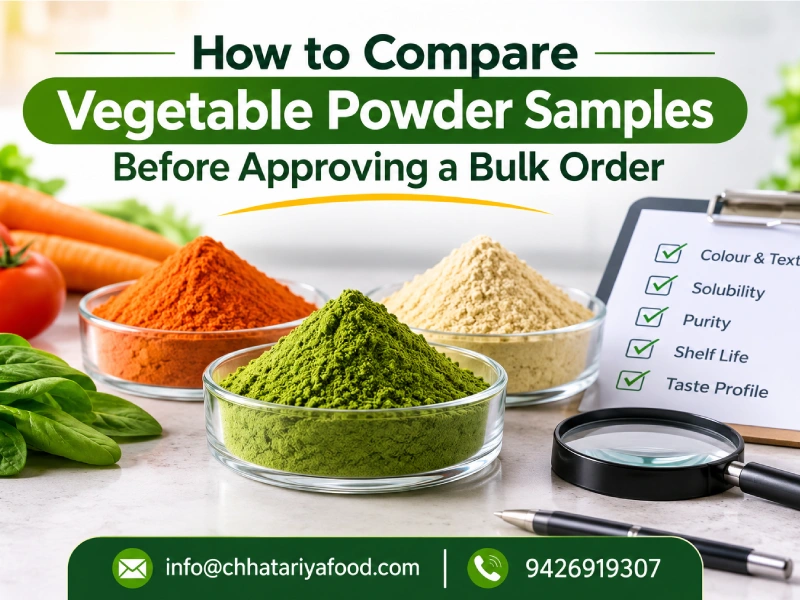
When you compare vegetable powder samples before placing a bulk order, you can identify quality differences before they affect production, flavour or customer satisfaction. A sample may look good in its packet but behave differently when mixed into soup, seasoning, sauce or another finished product.
For food processors, spice manufacturers, HoReCa businesses and private-label brands, sample approval should be based on clear requirements rather than appearance alone. Working with experienced dehydrated vegetable powder manufacturers india can help you assess product specifications, consistency and suitability for your application before confirming a larger purchase.
1. Define Your Product Requirements First
Before requesting samples, decide how the powder will be used. Tomato powder for a seasoning blend may require different properties from spinach powder intended for a soup mix or a vegetable blend for a convenience food.
Prepare a short checklist covering:
- Vegetable type and ingredient declaration
- Colour, flavour and aroma expectations
- Particle size and texture
- Moisture and microbiological specifications
- Solubility, dispersibility or rehydration needs
- Packaging, shelf life and storage conditions
Share these requirements with every supplier. This makes it easier to compare products fairly and avoid approving a sample that does not suit your manufacturing process.
2. Check Colour, Aroma and Flavour
Look beyond the first impression
Examine each sample under similar lighting. Note whether the colour is reasonably uniform and whether you can see unexpected dark particles, foreign material or noticeable variation. Natural colour can differ between vegetable varieties and batches, so compare against an agreed specification rather than expecting every powder to look identical.
Next, smell a small quantity and evaluate its flavour in a suitable test preparation. The powder should have a profile appropriate for the stated vegetable, without unexplained musty, rancid or otherwise unusual notes.
For seasoning and snack manufacturers, even a small flavour difference can affect the balance of the final blend. Record observations instead of relying on memory.
3. Test Performance in Your Actual Recipe
A powder that performs well on its own may not deliver the same results in a finished product. Test each sample using the same recipe, ingredient ratios, water temperature, mixing time and preparation method.
Depending on the application, check:
- Dispersibility: Does the powder spread evenly through the liquid or blend?
- Lump formation: Does it form persistent clumps during mixing?
- Texture: Does it create the required mouthfeel?
- Flavour impact: Is the vegetable note strong enough without overpowering other ingredients?
- Processing behaviour: Does it suit your existing equipment and production steps?
For sauces, soups and instant mixes, also observe how the powder behaves after the intended holding or cooking period. Use repeatable tests to compare samples rather than changing the recipe for each supplier.
4. Verify Specifications and Quality Documents
Appearance and taste cannot confirm every important quality parameter. Ask vegetable powder suppliers for a product specification sheet and available batch-related test reports.
Depending on the product and its intended use, relevant checks may include moisture, microbiological limits, foreign matter and other agreed safety or quality parameters. Confirm applicable requirements with your quality team and verify that the documentation matches the product and batch supplied.
The Food Safety and Standards Authority of India (FSSAI) publishes food safety regulations relevant to businesses operating in India. Buyers should check the requirements that apply to their product category and intended use.
Reliable documentation, clear batch identification and traceable records provide stronger assurance than verbal promises alone.
5. Compare Packaging and Storage Requirements
Packaging can influence how a dried vegetable powder handles moisture exposure during storage and transport. Check whether the sample arrives in intact, sealed packaging with suitable identification.
Ask suppliers about recommended storage conditions, shelf life, pack sizes and handling after opening. For export buyers, consider the expected transit time, destination conditions and applicable packaging or labelling requirements.
The goal is to assess whether the product can be stored and handled appropriately throughout your supply chain, not simply whether it performs well immediately after opening.
6. Evaluate Suppliers on More Than Price
When comparing Vegetable Powder Manufacturers in India, use the same product specifications and test method for each supplier. A lower quotation may not represent better value if the powder creates more waste, produces inconsistent flavour or requires process adjustments.
Evaluate each supplier on:
- Sample performance against your agreed specifications
- Quality documentation and batch traceability
- Consistency of product and particle size
- Minimum order quantity and packaging options
- Production lead time and delivery reliability
- Responsiveness to technical questions and complaints
This approach is useful across the vegetable powder market in India, where buyers may be sourcing for domestic production, wholesale distribution or international customers.
7. Approve the Sample Before Bulk Production
Once a sample passes your checks, document the approval. Record the product name, specifications, sample or batch reference, test results and date of approval. If relevant, retain a sealed reference sample for comparison when the commercial shipment arrives.
Make it clear that the bulk order must meet the agreed specifications. If the supplier changes the process, formulation or product grade, request confirmation and assess whether a new sample is needed.
Chhatariya Foods offers a range of vegetable powders for businesses exploring ingredient options for food production. Buyers can review its vegetable powder range and discuss application requirements before deciding which product to evaluate.
Final Thoughts
A structured sample evaluation helps you make a more confident bulk-buying decision. Check sensory quality, test performance in your actual recipe, review supporting documents and compare suppliers against the same criteria.
By setting clear acceptance standards before ordering, food businesses can reduce avoidable sourcing risks and build more consistent supplier relationships.
FAQ
1. How do you compare vegetable powder samples before a bulk order?
Compare samples using the same checklist and testing conditions. Evaluate colour, aroma, flavour, particle size, moisture specifications, mixing performance and suitability for your recipe. Review available quality documents, record the results and approve only samples that meet your agreed product requirements.
2. What quality checks should buyers perform on dried vegetable powder?
Buyers should assess appearance, aroma, flavour, particle size and performance in the intended application. Depending on the product, request relevant moisture and microbiological test results. Check packaging integrity, batch identification, storage instructions and shelf life before approving the sample for commercial use.
3. How do I choose reliable vegetable powder suppliers in India?
Compare suppliers on product consistency, sample performance, technical documentation, batch traceability, packaging and delivery reliability. Ask about minimum order quantities and production lead times. A supplier that communicates clearly and provides relevant specifications can make bulk procurement easier to manage.
4. Why should food manufacturers test vegetable powder before bulk purchasing?
Sample testing helps manufacturers identify differences in flavour, texture, dispersion and processing performance before committing to a large quantity. It also allows the quality team to check whether the ingredient meets agreed specifications. This can reduce avoidable production issues and inconsistencies in finished products.
5. What documents should I request from vegetable powder manufacturers in India?
Request a product specification sheet, ingredient declaration and available batch-related quality reports. Depending on the application, you may also need microbiological results, storage guidance and traceability information. Confirm that the documents match the product being purchased and meet the requirements relevant to your business.