
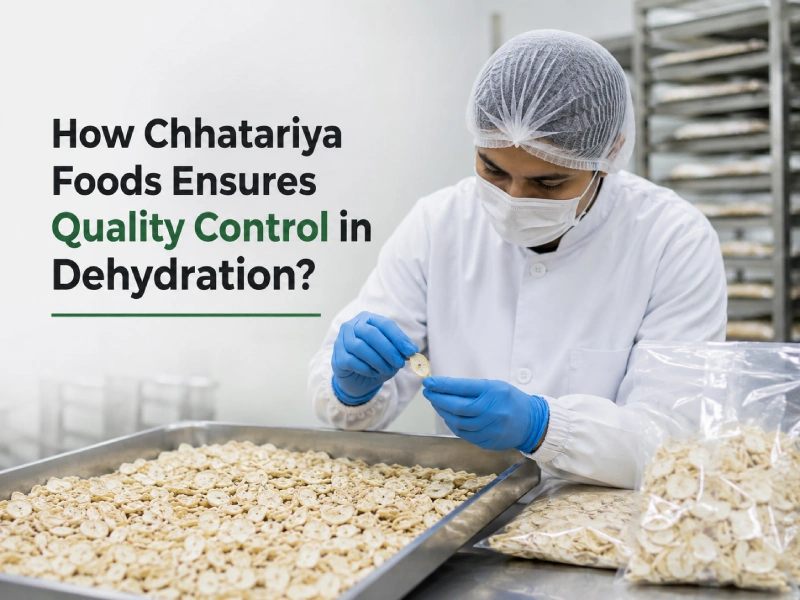
Quality Control in Food Dehydration is one of the most important factors for food manufacturers, exporters and global buyers when choosing a supplier. Inconsistent moisture levels, contamination risks and poor processing can affect shelf life, flavor and product safety.
At Chhatariya Foods Pvt. Ltd., quality control is built into every stage of production from selecting raw materials to final packaging. This systematic approach helps deliver reliable dehydrated products that meet the expectations of food processors, HoReCa businesses, retailers and international buyers.
Why Quality Control Matters in Food Dehydration
Why Buyers Prioritize Quality
Dehydrated ingredients are often used in large-scale food production, where consistency is critical. A small variation in quality can affect thousands of finished products.
Strong quality control helps ensure:
- Consistent flavor and aroma
- Controlled moisture levels
- Longer shelf life
- Food safety compliance
- Reduced product rejection rates
- Reliable export performance
The Quality Control Process at Chhatariya Foods
1. Careful Selection of Raw Materials
Quality begins with the raw ingredient.
For products such as Dehydrated Onion and Garlic, potatoes and vegetable powders, the company emphasizes:
- Selection of suitable crop varieties
- Freshness of raw materials
- Visual inspection for defects
- Removal of damaged or unsuitable produce
Using quality raw materials helps improve flavor retention, color consistency and overall product performance.
2. Hygienic Processing Practices
Food safety is a key part of Quality Control in Food Dehydration.
During processing, attention is given to:
- Clean handling procedures
- Controlled processing environments
- Regular sanitation practices
- Personnel hygiene protocols
These measures help minimize contamination risks and support consistent product quality.
3. Controlled Dehydration
Dehydration is not simply about removing water. The process must balance moisture reduction while preserving flavor, aroma and texture.
Key controls include:
- Temperature monitoring
- Drying time management
- Moisture level checks
- Batch consistency monitoring
Proper control helps produce ingredients that store well and perform reliably in food applications.
4. Quality Testing During Production
Instead of waiting until the end, quality checks are performed throughout production.
Common evaluations include:
- Moisture content
- Color consistency
- Particle size
- Aroma and flavor profile
- Foreign matter inspection
Continuous monitoring helps identify deviations early and maintain product uniformity.
5. Traceability and Batch Control
Modern food businesses expect transparency.
Batch traceability helps track:
- Raw material sourcing
- Production dates
- Processing batches
- Packaging details
- Dispatch records
This system supports both quality management and customer confidence.
6. Packaging and Storage
Quality can decline if products are not packed correctly.
Chhatariya Foods focuses on:
- Moisture-resistant packaging
- Proper sealing
- Batch identification
- Controlled storage conditions
Effective packaging helps preserve product quality during transportation and storage.
Products Covered Under the Quality System
Dehydrated Onion and Garlic
Consistency in moisture, color and flavor is especially important for seasoning manufacturers and food processors.
Dehydrated Potato Products
Dehydrated Potato Product buyers often require uniform texture and functional performance for snacks, bakery applications and convenience foods.
Vegetable Powders
Fine particle control and stable flavor profiles are important for beverage mixes, soups and nutritional products.
Premium Spices
Maintaining natural aroma and purity helps ensure reliable seasoning performance across batches.
Technology and Process Improvement
While many buyers search for the Best food dehydrators, equipment alone does not guarantee quality. The real difference comes from process control, operator training, maintenance practices and continuous monitoring.
Combining suitable technology with disciplined quality procedures helps achieve more consistent results.
Industry Perspective on Dehydration Quality
According to the Food and Agriculture Organization (FAO), proper dehydration and storage practices are crucial for maintaining food quality, minimizing post-harvest losses and enhancing shelf stability in processed foods.
Conclusion
Quality Control in Food Dehydration is not just a final inspection; it is a continuous process that begins with raw material selection and continues through processing, testing, packaging and storage.
By focusing on consistency, hygiene, traceability and controlled manufacturing, Chhatariya Foods aims to deliver reliable dehydrated ingredients. In a competitive global market, dependable quality is often the key factor in building lasting business relationships.
FAQ
1. Why is quality control important in food dehydration?
Quality control helps maintain consistent flavor, moisture, color and shelf life in dehydrated products. It also supports food safety, reduces production variability and helps manufacturers meet customer and export market expectations.
2. How does Chhatariya Foods ensure consistency in dehydrated onion and garlic products?
The company focuses on raw material selection, controlled dehydration, hygiene practices, moisture testing and batch monitoring. These measures help maintain consistent product quality for food processing and export applications.
3. What tests are commonly performed during food dehydration?
Common checks include moisture content, color consistency, particle size, aroma, flavor profile and foreign matter inspection. Continuous testing helps identify deviations early and maintain product uniformity across batches.
4. Why do export buyers prefer suppliers with strong traceability systems?
Traceability allows buyers to track raw materials, production batches, packaging and dispatch records. This improves transparency, supports food safety requirements and increases confidence in long-term supply partnerships.
5. Are dehydrated potato products also covered by quality control systems?
Yes. Quality systems help maintain consistent texture, moisture levels and functional performance in dehydrated potato products used in snacks, bakery items, convenience foods and food processing applications.
6. Do modern dehydrators alone guarantee product quality?
No. Equipment is important, but consistent quality also depends on process control, operator training, hygiene practices, maintenance, testing and continuous monitoring throughout the production cycle.