
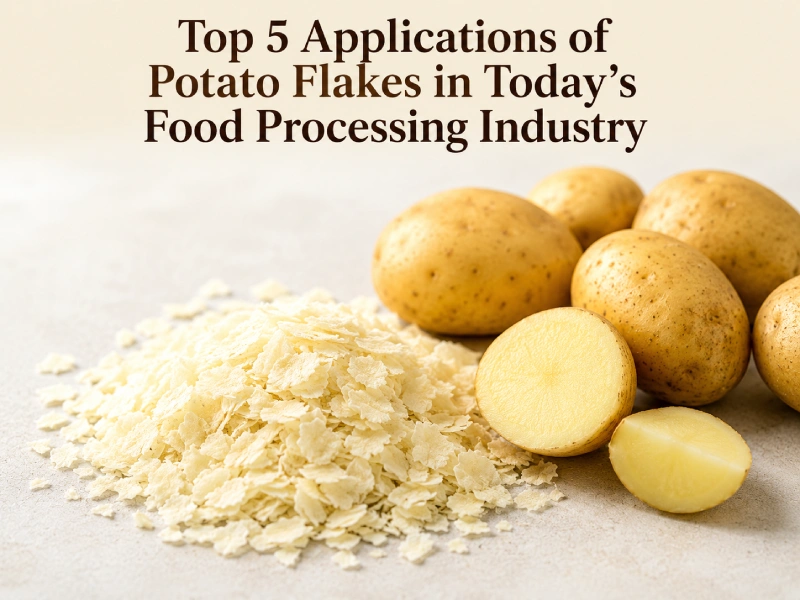
The growing demand for convenient, shelf-stable and high-quality food ingredients has increased the Applications of Potato Flakes across multiple industries. Today, food manufacturers rely on potato flakes because they offer excellent functionality, consistent quality and reduced processing time. Businesses looking for reliable dehydrated potato flakes can benefit from products that are specifically designed for industrial food production.
As consumer preferences shift toward ready-to-eat and convenience foods, dehydrated potato ingredients have become essential in modern manufacturing.
Why Potato Flakes Are Widely Used in Food Processing
Potato flakes are produced by cooking, mashing, drying and processing fresh potatoes into thin flakes. This process helps retain the natural characteristics of potatoes while significantly extending their storage life.
Compared to fresh potatoes, potato flakes offer several operational advantages:
- Consistent product quality
- Lower transportation costs
- Faster production processes
- Reduced preparation time
- Better inventory management
- Minimal processing waste
- Long shelf life
These advantages allow manufacturers to maintain consistent production without depending on seasonal raw material availability.
Top 5 Applications of Potato Flakes
1. Instant Mashed Potato Products
One of the most common Applications of Potato Flakes is the production of instant mashed potatoes.
Manufacturers prefer potato flakes because they rehydrate quickly while delivering a smooth, creamy texture. They also provide consistent taste across every production batch.
Key advantages include:
- Fast preparation
- Uniform consistency
- Easy seasoning
- Large-scale production efficiency
- Longer storage life
This makes potato flakes an ideal ingredient for retail brands, hotels, catering businesses and institutional kitchens.
2. Snack Food Manufacturing
The global snack food industry continues to expand, increasing demand for high-quality potato ingredients.
Many manufacturers use dried potato flakes to produce:
- Potato snacks
- Extruded snacks
- Crispy pellets
- Flavored chips
- Ready-to-fry products
Potato flakes improve product texture while helping maintain consistent expansion during manufacturing.
Because of their excellent binding properties, they also reduce production variations.
3. Bakery and Ready-to-Bake Products
Many commercial bakeries now include potato flakes in bread, buns, pizza bases, rolls and other baked goods.
Benefits for Bakers
Using potato flakes can help:
- Improve moisture retention
- Produce a softer crumb texture
- Extend product freshness
- Improve dough handling
- Reduce product dryness
These characteristics are particularly valuable for industrial bakeries producing large quantities every day.
For manufacturers focused on product consistency, potato flakes offer a dependable ingredient that performs well across different formulations.
4. Ready-to-Cook and Convenience Foods
Convenience foods have become one of the fastest-growing categories worldwide.
Food manufacturers use potato flakes in products such as:
- Instant soup mixes
- Ready meal kits
- Dry curry mixes
- Casserole mixes
- Instant fillings
- Frozen prepared foods
The flakes blend easily with other dehydrated ingredients, helping manufacturers create products that are quick to prepare while maintaining consistent taste and texture.
5. Seasoning and Dry Food Mixes
Potato flakes are increasingly used as a functional ingredient in seasoning blends and dry food mixes.
They help improve:
- Ingredient binding
- Product consistency
- Texture stability
- Uniform mixing
- Flavor distribution
This makes them suitable for spice manufacturers and companies producing coating mixes, batter systems and dry seasoning formulations.
Why Food Manufacturers Prefer Dehydrated Potato Flakes
Reliable food production depends on ingredients that perform consistently throughout the manufacturing process.
Leading dehydrated potato manufacturers focus on producing flakes with:
- Uniform particle size
- Controlled moisture content
- Consistent color
- Excellent rehydration properties
- Food-safe processing standards
These quality parameters help reduce production issues while supporting efficient large-scale manufacturing.
Growing Demand in the Dehydrated Potato Market
The global dehydrated potato market continues to grow as manufacturers look for ingredients that improve production efficiency without compromising quality. Changing consumer lifestyles, the popularity of convenience foods and increasing demand for ready-to-cook products have all contributed to this growth.
For food processors, dehydrated potato flakes provide several commercial advantages:
- Consistent supply throughout the year
- Lower transportation and storage costs
- Reduced preparation time
- Less product waste compared to fresh potatoes
- Easy integration into automated production lines
These benefits make potato flakes a dependable ingredient for businesses serving both domestic and international markets.
What Sets Chhatariya Foods Apart?
Choosing the right supplier is about more than pricing. Manufacturers need a partner who understands industrial food production and can deliver reliable quality with every shipment.
- Carefully selected potatoes sourced from trusted farms
- Hygienic processing using modern dehydration techniques
- Consistent quality across production batches
- Export-ready packaging for global shipments
- Flexible bulk supply options
- Timely delivery and dependable customer support
- Focus on long-term business relationships
This customer-focused approach helps manufacturers maintain consistent product quality while reducing procurement challenges.
Final Thoughts
The growing Applications of Potato Flakes demonstrate why this versatile ingredient has become an essential component of modern food manufacturing. From instant mashed potatoes and snack foods to bakery products, convenience meals and seasoning blends, potato flakes deliver consistency, efficiency and reliable performance across a wide range of applications.
As demand for processed and ready-to-eat foods continues to increase, sourcing from experienced dehydrated potato manufacturers becomes even more important. Chhatariya Foods Pvt. Ltd. combines quality raw materials, hygienic manufacturing practices and dependable bulk supply to meet the expectations of domestic and international buyers.
FAQ
1. What are the most common applications of potato flakes in the food industry?
Potato flakes are widely used in instant mashed potatoes, snack foods, bakery products, ready-to-cook meals, soup mixes, seasoning blends and processed food products. Their consistent quality, long shelf life and easy rehydration make them ideal for industrial food manufacturing.
2. Why do food manufacturers prefer dehydrated potato flakes over fresh potatoes?
Dehydrated potato flakes reduce preparation time, minimize storage requirements, lower transportation costs and provide consistent product quality throughout the year. They also help manufacturers reduce waste while improving production efficiency.
3. How should dehydrated potato flakes be stored?
Store potato flakes in airtight, food-grade packaging in a cool, dry place away from direct sunlight and moisture. Proper storage helps preserve freshness, maintains product quality and extends shelf life for commercial use.
4. Are potato flakes suitable for bakery applications?
Yes. Potato flakes are commonly used in bread, buns, rolls, pizza bases and other baked goods. They improve moisture retention, produce a softer texture and help baked products stay fresh for longer periods.
5. What should businesses consider when choosing dehydrated potato manufacturers?
Businesses should evaluate manufacturing standards, raw material quality, hygienic processing, batch consistency, export capabilities, packaging quality and the supplier’s ability to deliver bulk quantities consistently.