
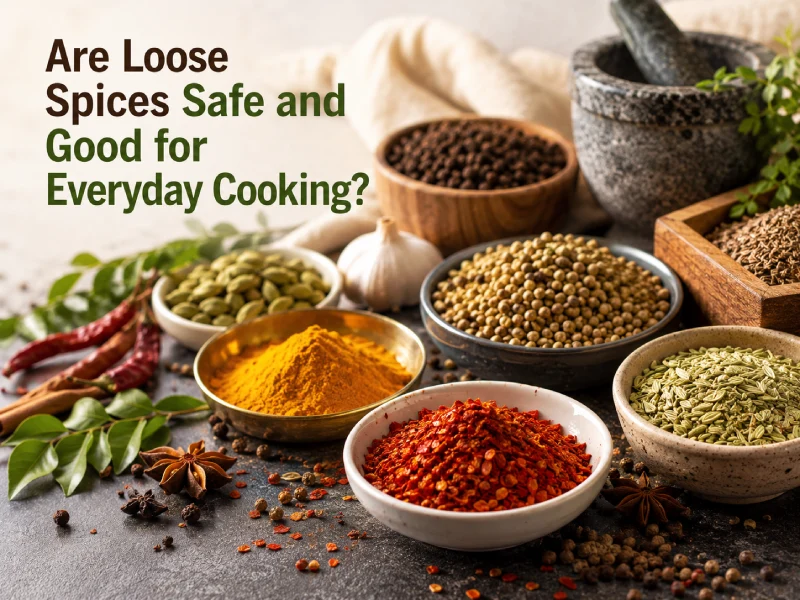
Loose Spices for Everyday Cooking may look attractive because they are easy to buy in small quantities and often cost less than packaged alternatives. But price and appearance alone do not tell you whether a spice is safe, pure or properly handled.
For everyday use, the important question is not simply whether a spice is loose or packaged. It is where it comes from, how it was processed, how it was stored and whether the supplier follows food-safety requirements. Businesses and consumers looking for reliable ingredients should work with a trusted Spices Manufacturer in India that can provide consistent quality and traceability.
What Are Loose Spices?
Loose spices are sold without individual retail packaging. They may be available as whole spices, crushed spices or powdered products at local markets, grocery stores and bulk shops.
Common examples include:
- Turmeric
- Cumin
- Coriander
- Black pepper
- Red chilli
- Cardamom
- Garam masala blends
Whole spices and powdered spices should not be treated in the same way. Whole spices are generally easier to inspect visually, while powders can make adulteration harder to identify.
Are Loose Spices Safe for Everyday Cooking?
There is no simple yes-or-no answer.
A loose spice can be safe when it comes from a reputable source and has been properly handled. However, unpackaged powdered spices carry greater quality and adulteration concerns because consumers may not know their manufacturing date, processing conditions, ingredient composition or storage history.
FSSAI specifically advises consumers to avoid buying powdered spices sold loose and recommends purchasing packaged spices from trusted brands.
This makes supplier selection an important part of everyday food safety.
Why Powdered Loose Spices Need More Attention
Adulteration Can Be Difficult to Detect
Ground spices can be mixed with cheaper materials or artificial colors to increase weight or improve appearance. FSSAI notes that visual and sensory checks alone may not always identify adulteration.
For example, unusually bright color, excessive shine, lumps or an unpleasant smell can be warning signs but their absence does not guarantee purity.
Storage Conditions Matter
Spices are dry ingredients but that does not mean they are immune to poor storage.
Exposure to:
- Moisture
- Dust
- Heat
- Direct sunlight
- Insects
- Unclean handling
can reduce quality and affect flavor and safety.
Loose vs Packaged Spices: What Should You Choose?
For everyday household use, properly packaged spices from a reliable manufacturer are generally a better choice because they provide clear labeling, batch details, ingredient information and better traceability.
Loose spices may offer freshness and affordability, but their manufacturing and storage history can be difficult to verify. However, packaging alone does not guarantee safety; the manufacturer’s quality standards, hygiene practices, labeling and traceability are equally important.
How to Choose a Safe Spice Supplier
Whether you are a household buyer or a food business, supplier selection should go beyond price.
1. Check Traceability
A reliable supplier should be able to identify the source, production batch and relevant product specifications.
2. Look for Food-Safety Compliance
Food businesses should work with suppliers that follow documented hygiene and food-safety practices.
FSSAI states that food businesses should implement effective Food Safety Management Systems based on HACCP principles and appropriate Good Manufacturing and Hygiene Practices.
3. Examine the Product
Avoid spices showing:
- Unusual artificial brightness
- Moisture or clumping
- Insect contamination
- Foreign particles
- Unpleasant odors
4. Prefer Consistent Suppliers
For food manufacturers, changing suppliers frequently can create variation in color, aroma, pungency and particle size.
A reliable Indian spices supplier should provide consistent specifications across batches.
What Makes a Trusted Spice Manufacturer?
For food processing companies, selecting the best spices manufacturer involves evaluating the complete supply chain.
Important factors include:
- Raw material sourcing
- Cleaning and processing
- Grinding controls
- Quality testing
- Hygienic manufacturing
- Packaging
- Batch traceability
- Consistent specifications
This is particularly important for companies manufacturing seasoning blends, snacks, instant foods, sauces and ready-to-eat products.
A professional spices company in India should be able to explain its quality process rather than simply compete on price.
The Smarter Approach to Everyday Spice Buying
Instead of asking only, “Are loose spices cheaper?”, ask:
Can I verify where this spice came from and how it was handled?
That simple change in thinking can help consumers and businesses make better purchasing decisions.
For manufacturers, retailers, exporters and HoReCa businesses, partnering with an established supplier provides greater control over ingredient quality and consistency.
Final Thoughts
Loose Spices for Everyday Cooking are not always unsafe, but loose powdered spices can have higher adulteration and traceability concerns. For regular use, properly packaged spices from a reputable manufacturer are generally a better choice.
For businesses, selecting a trusted spice supplier in India is equally important. Chhatariya Foods Pvt. Ltd. focuses on hygienic processing, consistent quality, clear specifications and reliable traceability to support safe and dependable spice sourcing.
FAQ
1. Are loose spices safe for everyday cooking?
Loose spices are not automatically unsafe, but loose powdered spices can carry higher adulteration and traceability risks. FSSAI recommends avoiding loose powdered spices and choosing products from trusted, identifiable sources. Whole spices from reputable sellers can be easier to inspect before use.
2. Why are packaged spices preferred over loose spices?
Packaged spices generally provide useful information such as manufacturer details, batch information, dates, ingredients and licensing details. This improves traceability and helps consumers identify the source of the product, while loose powders often provide limited information about processing and storage.
3. How can I identify adulterated loose spices?
Some warning signs include unusually bright colors, excessive shine, lumps, unpleasant odors, foreign particles, or abnormal texture. However, FSSAI notes that adulteration cannot always be identified through appearance or simple sensory checks, making reliable sourcing especially important.
4. How do I choose a trusted spice supplier in India?
Look for a supplier with documented quality-control practices, hygienic manufacturing facilities, traceable sourcing, consistent product specifications, appropriate food-safety compliance and reliable packaging. For commercial buyers, requesting product specifications and quality documentation can help evaluate suppliers before placing bulk orders.
5. Is it better to buy whole spices or powdered spices?
Whole spices from reputable sellers can offer an advantage because their physical condition is easier to inspect. FSSAI recommends purchasing whole spices from known sources and cleaning them properly before grinding, particularly when concerns about adulteration exist.