
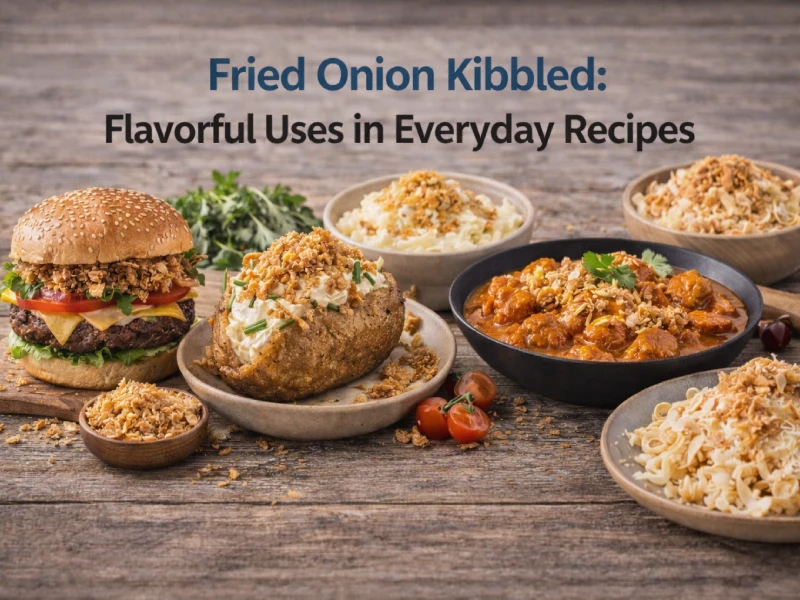
Fried Onion is one of the most versatile ingredients used in commercial kitchens and packaged food production. From ready-to-eat meals to snack seasoning, it delivers rich aroma, deep golden color, and consistent taste. Many food businesses today source high-quality Fried Onion Kibbled to simplify operations while maintaining authentic flavor.
For food manufacturers, restaurant chains, and institutional buyers in India, this ingredient is more than a garnish; it is a production asset.
Why Fried Onion Kibbled Is Preferred in Food Production
Fresh onions require peeling, slicing, frying, and constant monitoring. This increases labor, oil usage, and inconsistency.
Kibbled fried onions solve these issues by offering:
- Ready-to-use format
- Uniform cut size
- Controlled browning level
- Stable flavor profile
- Reduced preparation time
For large-scale kitchens and food processing units, this improves efficiency and cost control.
Flavor Profile and Functional Benefits
Balanced Sweetness and Umami
Slow frying brings out natural sugars in onions, creating mild sweetness and depth. This enhances gravies, rice dishes, sauces, and snack coatings without overpowering other spices.
Texture Enhancement
Kibbled texture adds light crunch in:
- Biryani toppings
- Savory snack mixes
- Instant noodle seasoning
- Ready meal packaging
The texture remains stable when stored properly.
Everyday Recipe Applications
1. Ready-to-Eat & Ready-to-Cook Products
Food manufacturers use fried onions in:
- Biryani mixes
- Curry bases
- Instant gravies
- Frozen paratha stuffing
Consistency is critical in these categories. Reliable sourcing ensures uniform color and taste in every batch.
2. Snacks & Savory Blends
Snack producers prefer this ingredient for:
- Namkeen mixtures
- Extruded snacks
- Coated nuts
- Masala powders
Its oil content enhances mouthfeel while improving seasoning adhesion.
3. HoReCa & Institutional Kitchens
Restaurants and catering businesses rely on bulk packs to reduce prep time. Instead of daily frying, chefs can focus on assembly and plating.
Buying from a verified Fried Onion Supplier ensures predictable supply and quality compliance.
Shelf Life and Storage Considerations
One of the major advantages is extended usability. The typical Fried onion kibbled shelf life ranges between 6 and 12 months when stored in airtight packaging away from moisture and direct sunlight.
Low moisture levels reduce microbial risk. According to the Food Safety and Standards Authority of India, maintaining proper moisture control and hygienic handling is essential for fried food products to remain safe during storage.
Bulk buyers should confirm:
- Moisture percentage
- Oil quality standards
- Packaging type (HDPE / laminated pouches)
- Batch traceability
Choosing the Right Fried Onion Manufacturer in India
Not all products deliver the same results. Selecting a trusted Fried Onion Manufacturer in India requires evaluating:
Raw Material Quality
Onions should be fresh, properly graded, and free from spoilage before frying.
Controlled Frying Process
Uniform temperature control ensures even browning without burning.
Oil Management
Frequent oil filtration and quality monitoring prevent off-flavors.
Quality Testing
Look for:
- Microbial analysis
- Moisture testing
- Color grading
- FSSAI compliance
Experienced manufacturers provide Certificates of Analysis for every bulk order.
To Be Concluded…
Fried Onion is no longer just a topping; it is a smart operational choice. For manufacturers and food service operators in India, it supports efficiency, flavor consistency, and cost control.
With rising demand for ready-to-use ingredients, kibbled formats will continue to drive efficiency in modern food production. The real advantage comes from partnering with experienced suppliers who ensure transparency, maintain tight process control, and follow strict quality standards at every stage.
Companies like Chhatariya Foods Pvt. Ltd. deliver consistent quality and dependable supply, helping food brands scale with confidence.
FAQs
1. How long is the fried onion kibbled shelf life in bulk packaging?
The fried onion kibbled shelf life typically ranges from 6 to 12 months under proper storage conditions. Airtight packaging, low humidity, and controlled temperature help maintain crispness and flavor stability for institutional and manufacturing use.
2. How do I choose a reliable fried onion supplier in India?
Select a Fried Onion Supplier with FSSAI compliance, moisture testing reports, consistent batch quality, and scalable production capacity. Transparency in oil quality, raw material sourcing, and packaging standards is essential for bulk procurement.
3. Can food manufacturers use kibbled fried onions in ready-to-eat meals?
Yes. Kibbled fried onions are widely used in ready-to-eat meals, gravies, biryani mixes, and frozen foods. They offer uniform taste, consistent browning, and reduced preparation time compared to fresh frying.
4. What industries benefit most from buying fried onion kibbled?
Food processing units, restaurant chains, snack manufacturers, catering companies, and retail brands benefit from bulk sourcing due to longer shelf life, cost efficiency, and standardized flavor output.
5. Is there a difference between fresh fried onions and commercially processed ones?
Commercially processed fried onions are prepared under controlled temperature and oil management systems, ensuring uniform color and reduced moisture. Fresh frying may vary in taste and texture depending on batch conditions.
6. Why should I buy fried onion kibbled instead of slicing fresh onions?
Buying fried onion kibbled saves labor, reduces oil usage, and ensures consistent taste. It eliminates peeling, slicing, and frying steps, improving production speed and operational efficiency in commercial kitchens.