
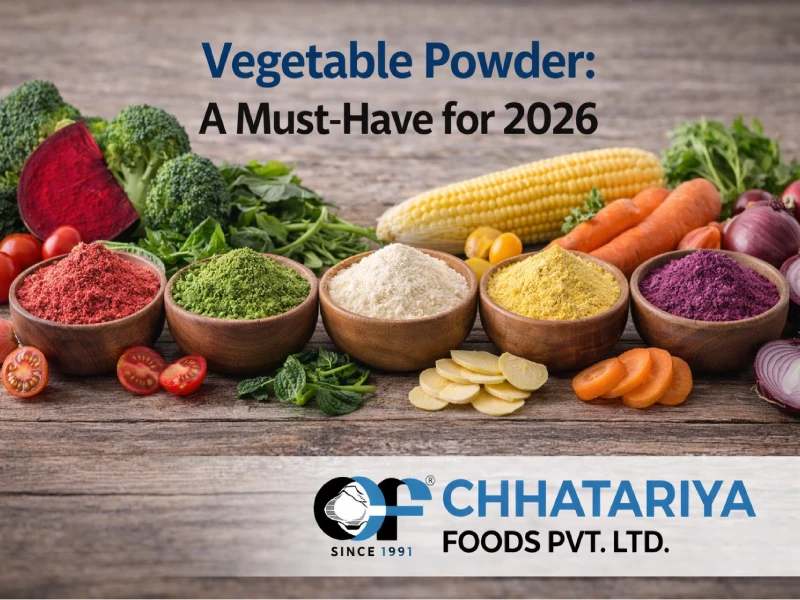
Vegetable Powder Ingredient is no longer just a backup ingredient it has become a strategic tool for food manufacturers aiming to scale efficiently, maintain consistency and meet rising clean-label demands. In 2026, food and beverage brands across India are relying on trusted Vegetable Powder Manufacturers in India to streamline production and improve product quality.
From ready-to-eat meals to sauces, snacks, soups and seasoning blends, vegetable-based powders are reshaping how food is processed and delivered at scale. For institutional buyers, restaurant chains and retail brands, the shift is practical, not just trend-driven.
Let’s break down why Vegetable Powder Ingredient is now essential.
The Changing Needs of the Food Industry in 2026
The food sector is under pressure from multiple sides:
- Demand for longer shelf life
- Rising raw material price fluctuations
- Need for uniform taste and color
- Clean-label and natural ingredient requirements
- Faster production cycles
Fresh vegetables are seasonal and perishable. Managing storage, spoilage and inconsistent quality adds operational risk.
Dehydrated formats solve these problems efficiently.
Why Vegetable Powder Is Gaining Strategic Importance
1. Extended Shelf Life Without Compromising Nutrition
Proper dehydration removes moisture while retaining most nutrients, flavor compounds and color. According to the U.S. Department of Agriculture, dehydration significantly reduces microbial growth risk when moisture levels are controlled properly.
For manufacturers, this means:
- Lower wastage
- Stable inventory management
- Easier bulk procurement
This is especially important for export-oriented brands and large institutional kitchens.
2. Consistent Taste, Color and Texture
Standardization is critical in food production. A batch of soup mix or seasoning blend must taste identical across regions and production cycles.
Working with top vegetable powder manufacturers ensures:
- Controlled sourcing of raw vegetables
- Standardized dehydration processes
- Lab-tested moisture levels
- Batch-level quality checks
Consistency protects brand reputation particularly for retail chains and QSR brands operating nationwide.
3. Cost Efficiency at Scale
Bulk vegetable powder India sourcing reduces:
- Cold storage costs
- Transportation losses
- Handling labor
- Cleaning and trimming waste
For food service businesses, powdered forms eliminate prep time. For factories, it reduces processing stages.
When margins are tight, these operational efficiencies matter.
4. Clean Label and Natural Positioning
Consumers are reading labels more carefully than ever.
Vegetable-based powders:
- Contain no artificial colors (when sourced correctly)
- Provide natural flavor enhancement
- Improve product nutrition profiles
- Support “made with real vegetables” claims
However, transparency depends on sourcing. Partnering with verified vegetable powder suppliers India ensures documentation such as:
- COA (Certificate of Analysis)
- Microbial reports
- Allergen declarations
- Traceability records
These are essential for institutional buyers and retail distribution.
Applications Across Food Segments
Vegetable Powder Ingredients are no longer limited to soups.
Ready-to-Eat & Instant Foods
- Curry bases
- Rice mixes
- Noodles and pasta seasoning
- Gravies
Snacks & Savory Products
- Masala blends
- Extruded snacks
- Baked chips
- Coated nuts
HoReCa & Institutional Kitchens
- Bulk gravies
- Central kitchen bases
- Marinades
- Dip blends
Health & Functional Foods
- Smoothie mixes
- Protein blends
- Nutritional supplements
Versatility is one of the strongest reasons food formulators prefer dehydrated vegetable powder suppliers India over fresh procurement models.
What to Look for in a Reliable Supplier
Choosing the right partner is as important as choosing the ingredient.
1. Raw Material Sourcing Transparency
Vegetables should be sourced from reliable farms with pesticide compliance checks.
2. Processing Infrastructure
Look for:
- Controlled dehydration technology
- Hygienic handling systems
- Low-temperature drying (where required)
- Metal detection and sieving systems
3. Certifications
- FSSAI compliance
- ISO certifications
- HACCP standards
4. Scalability
Can the supplier handle sudden bulk requirements?
Institutional buyers must assess supply continuity.
India’s Growing Role in Vegetable Powder Production
India has become a strong hub for natural ingredient manufacturing due to:
- Agricultural diversity
- Competitive processing costs
- Skilled workforce
- Export-ready compliance infrastructure
Many top vegetable powder manufacturers now supply both domestic and global markets.
For retail and food service chains expanding across India, local sourcing reduces lead time and currency risks.
Risk Management: A Hidden Advantage
Fresh vegetables are vulnerable to:
- Seasonal shortages
- Weather disruptions
- Price volatility
Powdered alternatives help manufacturers maintain stable pricing and supply forecasting. This makes financial planning more predictable.
In 2026, procurement teams are evaluating ingredients not just for taste but for supply security.
To Be Concluded…
Vegetable Powder has shifted from being a supporting ingredient to a core operational asset.
It helps manufacturers:
- Improve consistency
- Reduce waste
- Extend shelf life
- Optimize cost
- Meet clean-label expectations
- Scale efficiently
For food & beverage companies, restaurant chains and institutional buyers in India, investing in the right sourcing partner is not optional, it’s strategic.
Companies like Chhatariya Foods Pvt. Ltd. support this shift by supplying high-quality vegetable powders that align with industry standards and evolving market expectations.
FAQs
1. Why are vegetable powder suppliers in India gaining popularity in 2026?
Vegetable powder suppliers India are expanding due to consistent agricultural output, cost-effective processing and strong export compliance. Food brands prefer Indian suppliers for bulk availability, quality documentation and scalable production capacity suitable for retail and institutional markets.
2. How do dehydrated vegetable powder suppliers in India ensure quality?
Reputed dehydrated vegetable powder suppliers India conduct moisture testing, microbial analysis and pesticide checks. Many operate under HACCP and ISO systems, offering Certificates of Analysis and traceability documentation for each production batch.
3. Is vegetable powder suitable for clean-label food products?
Yes. When sourced from trusted manufacturers, vegetable powder contains no artificial colors or preservatives. It supports natural labeling claims and helps brands meet consumer demand for minimally processed ingredients.
4. What industries benefit most from bulk vegetable powder in India?
Food & beverage manufacturers, QSR chains, ready-to-eat brands, snack producers, institutional kitchens and retail grocery chains benefit the most due to longer shelf life, consistent flavor and lower operational costs.
5. How do top vegetable powder manufacturers maintain consistency?
Top vegetable powder manufacturers standardize raw material sourcing, control dehydration temperatures, conduct lab testing and follow strict quality assurance systems to ensure uniform taste, color and particle size across batches.
6. Can vegetable powder replace fresh vegetables completely in manufacturing?
It depends on the product category. For seasoning blends, soups, gravies and instant foods, vegetable powder works effectively. However, fresh vegetables may still be needed for texture-based or premium whole-food applications.